Este recurso recomienda que los programas duales o de multiservicios reconsideren el concepto de intercesoría, para responder de mejor manera a las necesidades diversas y de amplia gama que los sobrevivientes de la violencia sexual presentan, revisualizando la intercesoría de tal manera que se extienda hasta cubrir más allá del cuidado y apoyo que se...
This resource recommends dual/multi-service programs reconsider the concept of advocacy to be more responsive to the diverse and wide-ranging needs of survivors of sexual violence, and re-envision advocacy to expand beyond the care and support provided on helplines, in courtrooms, or hospitals, to also include the critical long-term emotional support survivors need in a range...
Esta guía explora cómo los programas de servicios duales o de multiservicios pueden proveer servicios comprehensivos que atienden la gama completa que los sobrevivientes con experiencias variadas experimentan –yendo más allá de una respuesta inmediata a una crisis, a realmente cubrir, en su totalidad, la amplia gama de situaciones que afectan a los sobrevivientes, tanto...
This guide explores how dual/multi-service programs can provide comprehensive services that address the entire scope of survivors’ experiences — going beyond immediate crisis response to supporting a wide range of both immediate and long-term issues that affect survivors’ whole selves. For more resources from the Sexual Assault Demonstration Initiative (SADI) click here. Publish Date April...
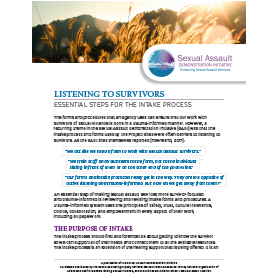
This tool assists dual/multi-service programs with restructuring their intake forms and procedures to align with approaches that are more survivor-focused and trauma-informed. Recommendations include building forms and procedures from a place of establishing relationship, safety, trust, cultural relevance, choice, collaboration and empowerment with survivors. For more resources from the Sexual Assault Demonstration Initiative (SADI) click...
This guide was developed for local rape crisis advocates who may be asked to work with a survivor with autism. It is a brief primer on autism, how persons who have autism may respond to a traumatic event and the importance of working with disability providers in a collaborative fashion. There are resource lists for advocates...
This example can help SARTs develop a logic model. This is not intended to be the only model for SART work, but it shows an example of what a final product might look like. SARTs are welcome to reference this model, create modifications, or draw upon it as a template when developing their own logic...
The National Sexual Violence Resource Center (NSVRC) is pleased to announce the release of the Sexual Assault Response Team (SART) Toolkit, an online toolkit to address the needs of sexual assault survivors through a continued partnership with the Office for Victims of Crime (OVC).
Immigrant Victims of Sexual Assault Introduction to Immigrant Victims Specialized information and training is required of SARTs to serve any victim population. Victims of sexual assault who are immigrants are no different. SARTs that receive specific training and develop protocols and policies on responding to immigrant victims will improve outcomes for sexual assault survivors and...
Nulla vitae elit libero, a pharetra augue. Nulla vitae elit libero, a pharetra augue. Nulla vitae elit libero, a pharetra augue. Donec sed odio dui. Etiam porta sem malesuada.