From the National Research Center on Hispanic Children and Families As communities become more culturally and linguistically diverse, community-based service organizations (CBOs) are called to do more to reduce disparities in access and use of important social services. An important strategy is developing cultural competency—behaviors, attitudes, and policies that enable CBOs to work effectively in...
This research translation summarizes a national CDC survey from 2015 on sexual identity and health-related behaviors of high school students. The report found that students who identify as gay, lesbian, or bisexual face significant health disparities. Publish Date 2017
The Sexual Assault Demonstration Initiative (SADI) was created to enhance sexual assault outreach, services, and community partnerships in dual/multi-service programs. Six sites across the nation engaged in a four-year process of assessment, planning, and implementation of new and enhanced services and organizational capacity building. The Final Report provides concrete lessons learned and recommendations for funders,...
NSVRC’s xCHANGE Forum summer series is an opportunity for those working to end sexual violence to exchange information and explore new research. Through live discussion researchers, advocates, and practitioners can connect to better understand current research, best practices, and emerging needs. Publish Date 2016
The National Institute of Justice released a report on violence experienced by American Indian and Alaska Native women and men. Using data from the 2010 National Intimate Partner and Sexual Violence Survey (NISVS), the report provides an in-depth look at the prevalence of sexual violence, physical violence by intimate partners, stalking, and psychological aggression by...
(Text from Disability Rights Wisconsin website) Developed through the Violence Against Women with Disabilities and Deaf Women Project of Wisconsin, A Practical Guide for Creating Trauma-Informed Disability, Domestic Violence and Sexual Assault Organizations highlights and explores effective trauma-informed conditions or core values that victims, survivors and people with disabilities find essential for safety and healing. The Guide...
This paper provides information and research on forced marriage in the United States and its intersections with child abuse, sexual assault and rape, domestic and family violence, stalking, female genital mutilation/cutting (FGM/C), and human trafficking. The research demonstrates that forced marriage is a serious but neglected problem in this country, and despite many advocates’ best...
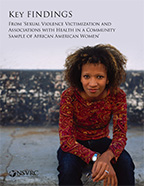
Basile, Smith, Fowler, Walters, and Hamburger (2016) offer a window into the lived experiences of African American women in Sexual violence victimization and associations with health in a community sample of African American women. This research translation summarizes the article’s key findings to help support sexual violence prevention and response strategies with Black and African American...
The guidance, through a series of detailed case examples, advises law enforcement agencies to incorporate the following principles into clear policies, comprehensive training and effective supervision protocols: Recognize and address biases, assumptions and stereotypes about victims. Treat all victims with respect and employ interviewing tactics that encourage a victim to participate and provide facts about...
Nulla vitae elit libero, a pharetra augue. Nulla vitae elit libero, a pharetra augue. Nulla vitae elit libero, a pharetra augue. Donec sed odio dui. Etiam porta sem malesuada.