Introducing the Preventing Sexual Violence in Disasters Infographic

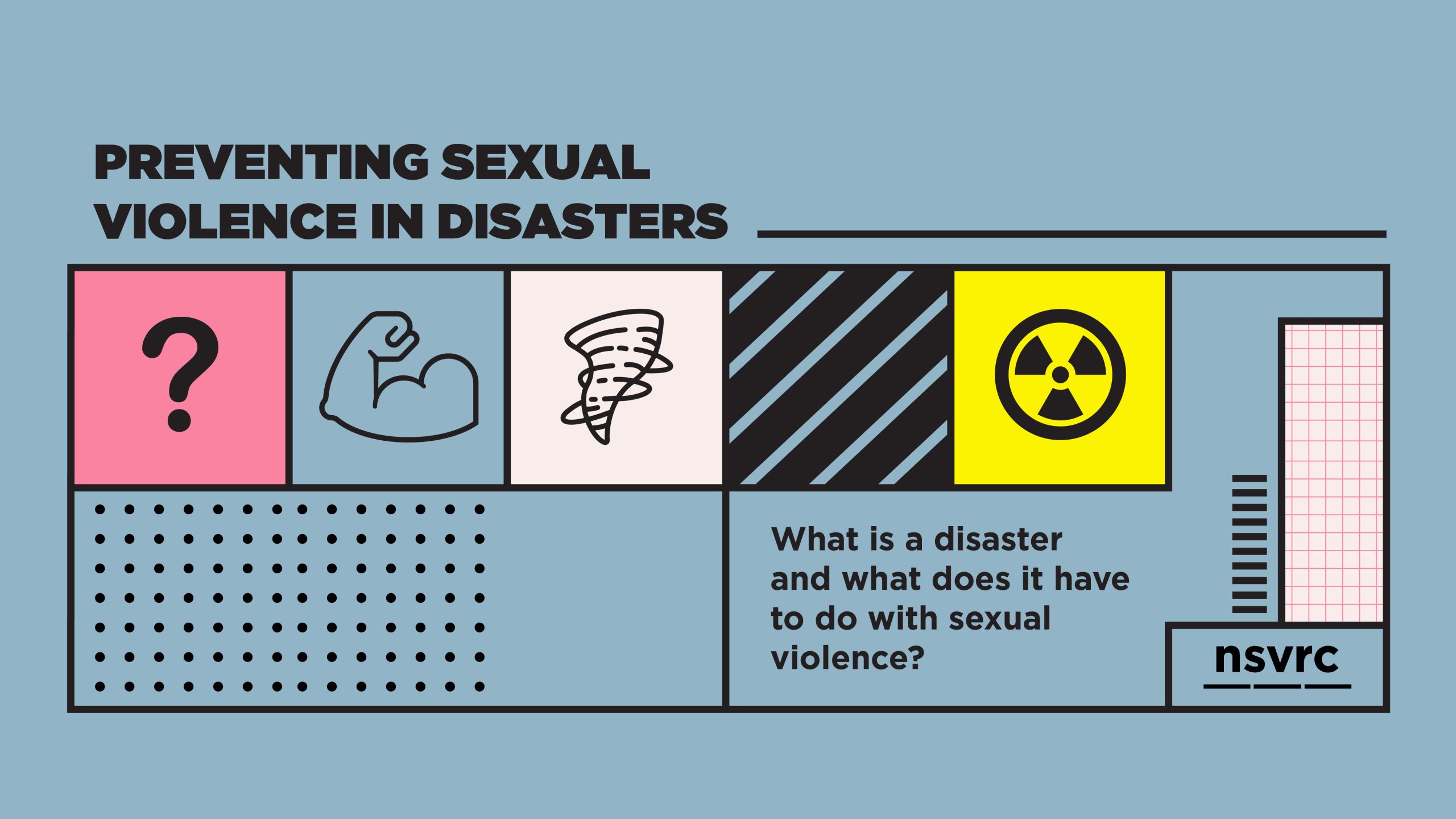
Preventing Sexual Violence in Disasters and Public Health Emergencies
NSVRC staff worked with an advisory group of organizations and leaders at local, state, and national levels supporting Black, Indigenous, Latinx, and Asian American and Pacific Islander survivors of sexual violence to create this infographic, which highlights large-scale issues that are exacerbated by disasters and provides guiding questions and inspiration for how to prevent sexual...
New LGBTQ Resources for Service Providers
In 2012, NSVRC developed an information packet of materials for service providers working with the LGBTQ+ community. These resources were well-received and widely used by the field for many years. In 2023, NSVRC staff began talking with key partners about the current needs of LGBTQ+ community members and felt it was time to update our...
Amplify Leadership Lab to Uproot Gender-Based Violence
In this episode, we talk with Anne Smith and Diana González about Amplify. Amplify is a national project of the Vermont Network focused on strengthening collective leadership to mobilize a more powerful movement to end gender-based violence. Participants:  Sally J. Laskey, Evaluation Coordinator, National Sexual Violence Resource Center Anne Smith, Director of Training and Leadership...
How Do We Get There from Here: Evaluating Primary Prevention Initiatives
This online course explores the basics of evaluation related to health equity and the primary prevention of sexual violence.
Preventing Sexual Violence in Disasters and Public Health Emergencies
Preventing Sexual Violence in Disasters and Public Health Emergencies This infographic explores what disasters are and what they have to do with sexual violence.
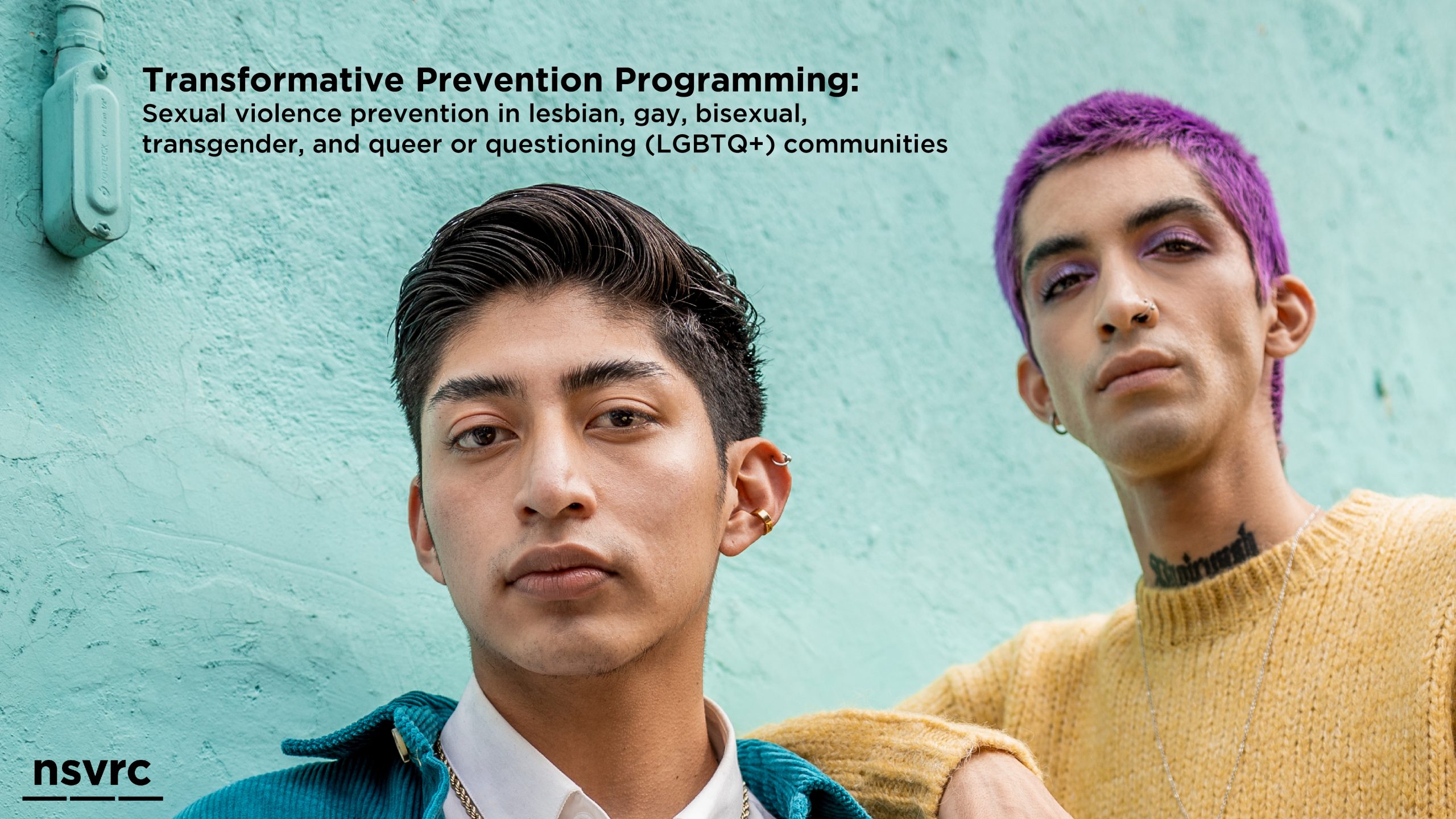
Transformative Prevention Programming
This guide provides information to state and community-based sexual violence prevention educators and practitioners on preventing sexual violence against individuals who identify as LGBTQ+.
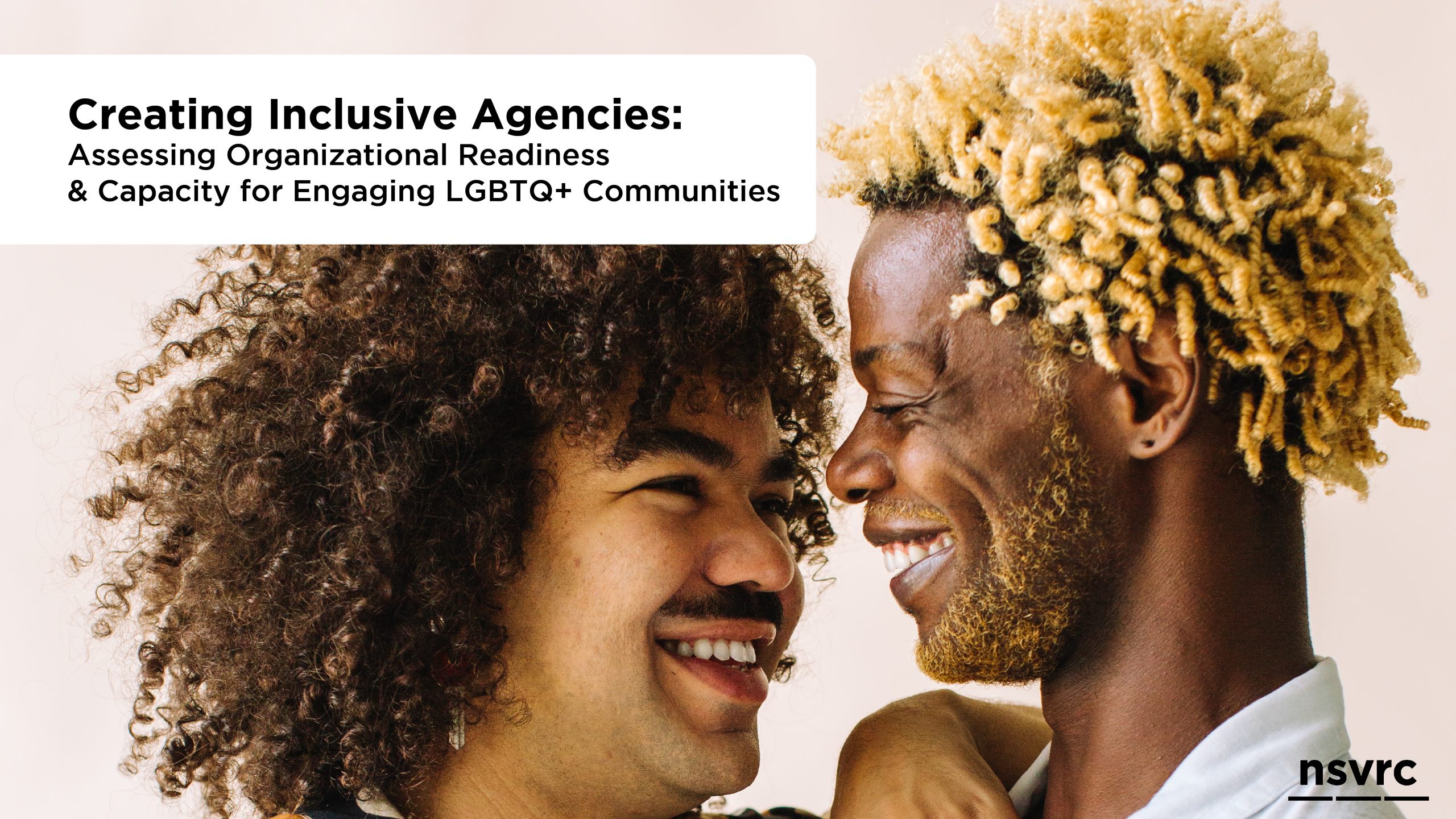
Creating Inclusive Agencies: Assessing Organizational Readiness & Capacity for Engaging LGBTQ+ Communities
Before reaching out to lesbian, gay, bisexual, transgender, queer or questioning (LGBTQ+) communities, or trying to implement prevention strategies or survivor services, organizations should first assess their current organizational and individual capacity to appropriately engage with LGBTQ+ people in affirming ways.
Addressing Three Challenges in Measuring Bystander Intervention
This episode is a rebroadcast of a conversation with Dr. Hennessy Garza with NSVRC staff breaking down three challenges in evaluating bystander intervention-focused prevention programs and three ways to address those challenges.   Show Notes: Beyond Intervening: Strengths, Limitations, & Implications for Bystander Intervention Research– Extended Conversation with Dr. Hennessy Garza (Video Podcast) Engaging Bystanders to...
Plain Language for Sexual Assault, Abuse, and Harassment
This 30-minute course explains why plain language is important for messaging about sexual violence and provides opportunities to practice using plain language.
1 3 4 5 6 7 16